
Insights

Branding for sporting events: what to consider when you compete on the global stage

Published date
22 December 2025
Reading time
8 min

Branding a major sporting event is unlike any other creative challenge. It brings together vast spaces, high stakeholder expectations, and the pressure of pristine global visibility that never skips a beat. Concepts must not only look extraordinary but withstand the pace, unpredictability, and scale of elite sport. With more than two decades of experience – from delivering for Silverstone to supporting Team GB cyclists – Grapefruit Graphics has learned how to bring cohesion and impact to even the most complex environments. 

Here, Lisa Samuels, general manager at Grapefruit Graphics, shares the considerations that matter most when branding for the world’s biggest stages, and why strong production partnerships are essential from the outset.

The scale and pace of global sporting events

Few industries operate with the same scale and intensity as branding for global sport. Visuals must cover multiple touchpoints – including venues, athlete areas, media backdrops, hospitality suites, public walkways, and beyond – all while remaining consistent and unmistakably part of the same identity. Every asset becomes crucial to the spectator experience – and often to the quality of the broadcast, too.

These events also shift constantly. Sponsor announcements land late, layouts evolve, and site teams often make updates right up until installation. Branding must therefore be both robust and adaptable, ready to pivot without letting stress cloud judgement. Our background in the marine sector prepared us well for this environment; tight turnarounds, unpredictable conditions, and complex logistics are part of our DNA.

dominion-blog-branding-for-sporting-events-1-1200x800.jpg
Lisa Samuels, general manager at Grapefruit Graphics

Getting to the heart of the brief

Clarity is the key to any event’s success. Before designing anything, we work to understand the story the organisers want to tell – whether that’s high-octane energy, premium sophistication, or a welcoming, community-focused feel. This early briefing alignment sets the tone for every creative decision thereafter. And, most importantly, it prevents costly and time-consuming missteps from creeping in later.

We also take time to understand the venue. The difference in requirements for indoor arenas versus open landscapes, or single versus multi-site environments, all influence details such as materials, sightlines, installation methods, and even the way visitors encounter the brand. Mapping each of these key details helps us figure out how to bring the identity to life in a way that looks great, works smoothly, and truly reflects the character of the event.

Global sporting events don’t stand still, so the brief must be strong enough to guide the identity yet flexible enough to accommodate inevitable change. This balance is central to delivering a creative that remains coherent under tight timelines and shifting conditions.

Ambitious sporting events require seamless collaboration between creative and production. Our 20-year-plus relationship with Dominion is grounded in shared experience.
Designing branding that resonates in the real world

Resonant branding comes from listening – to clients, athletes, audiences, and the sport’s wider culture. Understanding what has been done before, what sets this event apart, and how people should feel when they arrive helps us design an identity that reflects not just a logo, but the infectious spirit of the sporting occasion.

A defining feature of our process is the collaboration between creative and production teams. Because our designers work closely with our technical specialists, every concept is tested against real-world constraints from the outset. This means the ideas we present are not only visually compelling but practical to manufacture, install, and maintain across fast-moving environments.

Consistency across hundreds of touchpoints

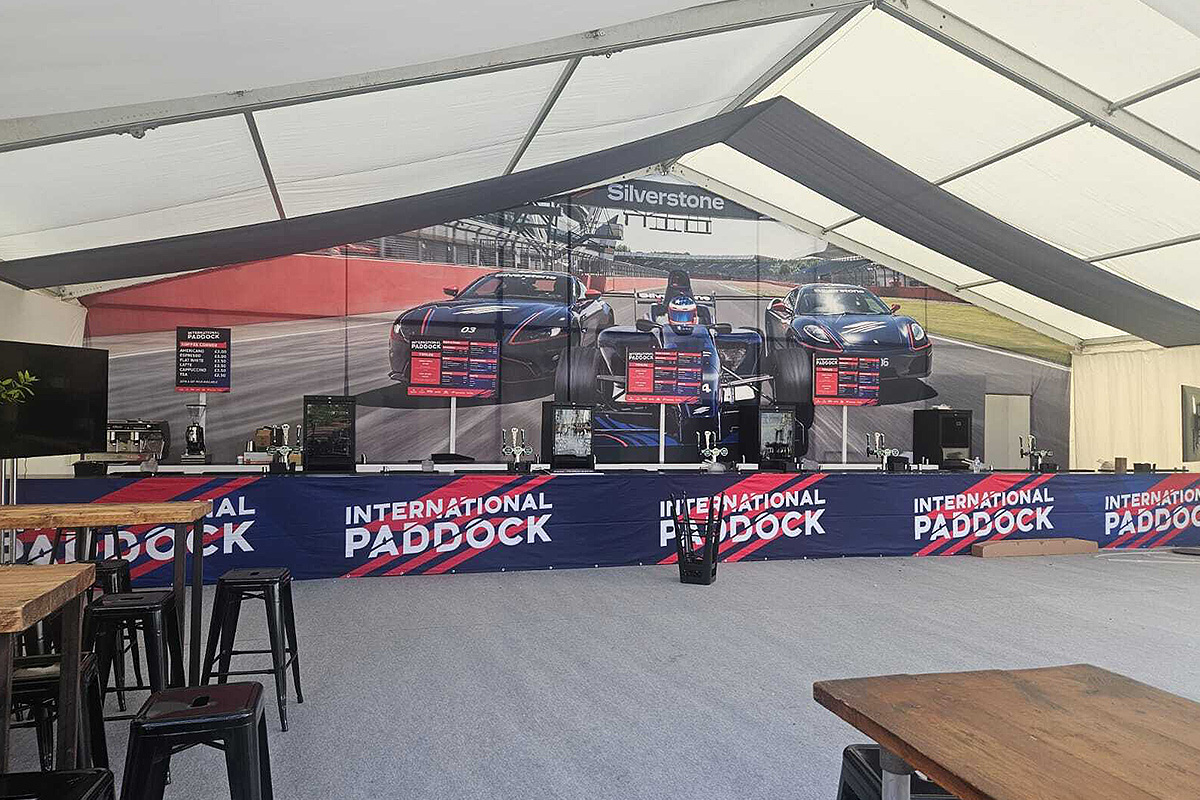
When branding spreads across hundreds of assets, consistency becomes a discipline. We begin by identifying the event’s most influential moments – from arrival sequences and high-traffic routes to the places most visible on camera. These focal points create a streamlined visual rhythm and help determine where design elements should be scaled up, simplified, or adapted.

Different zones often require distinct atmospheres, yet they still need to feel like part of a single narrative. Once we define the core visual language, we adapt it carefully to suit areas such as staff breakouts, hospitality environments, athlete zones, and public spaces. Flexibility is built in as standard, but cohesion remains constant. When done well, the result is an identity that feels clear, controlled, and immersive from every angle.

dominion-blog-branding-for-sporting-events-4-1200x800.jpg
dominion-blog-branding-for-sporting-events-2-800x1000.jpg
dominion-blog-branding-for-sporting-events-3-800x1000.svg

Designing for environments that push limits

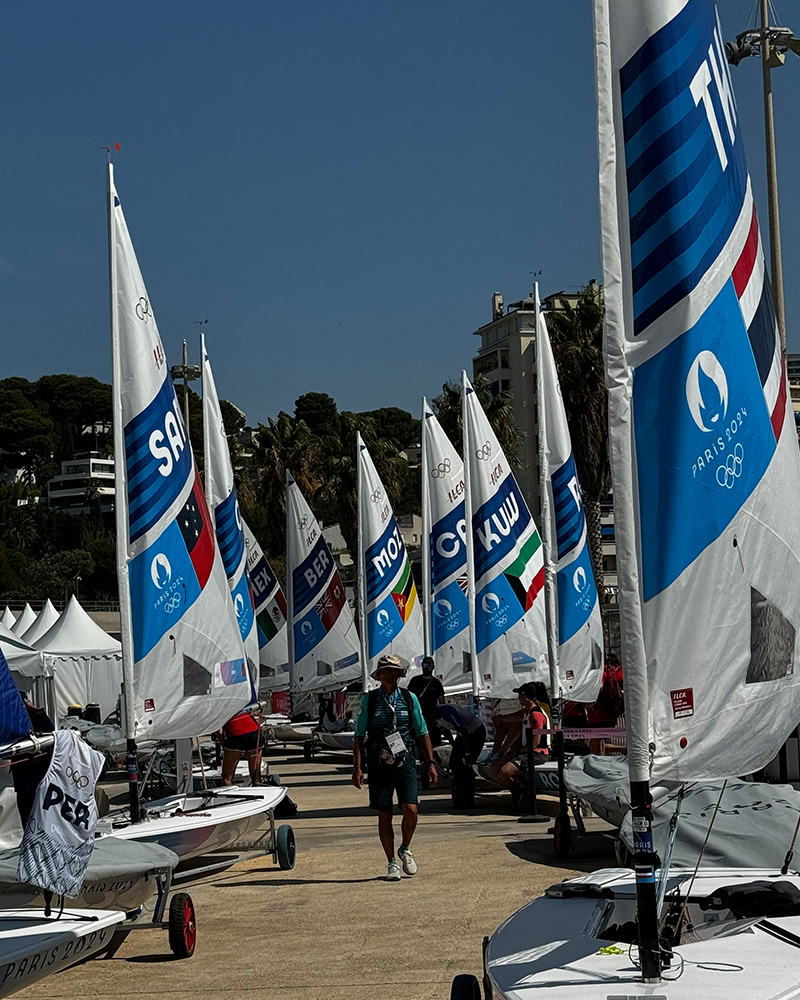
Sporting settings introduce practical challenges many sectors never encounter. Outdoor venues need superior quality materials that withstand wind, moisture, and harsh light, while also being highly durable to withstand heavy footfall. Indoor arenas require solutions that install quickly and work effortlessly around broadcast infrastructure. And water-based events need graphics that hold up in constantly-shifting natural conditions.

Structural choices matter too. For example, timber frames offer strength and adaptability, textiles and vinyl allow rapid dressing of spaces, and lightweight solutions can be deployed easily when timings are tight. Light, terrain, and crowd behaviour all influence how graphics are placed and how they will be experienced.

Sustainability is now a leading consideration too. Reducing waste by avoiding date-specific graphics or selecting materials that can be repurposed for future events is becoming an expectation rather than an extra, and this is something we’re continuing to champion.

Practicality that define success

Creativity makes an event memorable, but practical design decisions determine whether the branding genuinely works and represents your client well. Sightlines must be unobstructed, messaging clear, and navigation intuitive. Wayfinding, especially for multilingual audiences or people with disabilities, relies on clear legibility and visual hierarchy, with universal iconography helping to make signage more accessible.

Event spaces are high-pressure environments, and visitors must move confidently and safely. These real-world considerations are often overlooked in conceptual stages, but they become essential once the audience arrives.

Global sporting events don’t stand still, so the brief must be strong enough to guide the identity yet flexible enough to accommodate inevitable change.

The value of early production partnership

Ambitious sporting events require seamless collaboration between creative and production. That’s why we involve partners like Dominion as early as possible. Their technical insight during the scoping stage – especially in extra-large format print – helps us refine concepts, choose the most effective materials, and plan installations with unshakable confidence.

Our 20-year-plus relationship with Dominion is grounded in shared experience. When deadlines are tight or specifications evolve, their understanding of scale, accuracy, and logistics ensures the vision translates cleanly from brief to reality. This partnership reduces risk, improves efficiency, and supports the calm, controlled delivery these events demand.

Delivering a smooth creative-to-production handover

A successful handover relies on clear processes with watertight communication. We ensure every element – from design proofs to final artwork – is consistently labelled, tracked, and aligned with the installation plan. When production partners have this confidence from the outset, they can work autonomously and efficiently on site.

Post-event debriefs are equally important. Reviewing what worked, what didn’t, and how we can refine the process ensures each project becomes smoother than the last.

Resonant branding comes from listening – to clients, athletes, audiences, and the sport’s wider culture.

Working within budgets, timelines, and logistics

Even the most creative branding must work within practical boundaries. Clear budgets guide material choices, realistic timelines keep momentum steady, and shared schedules help manage sponsor deadlines, production windows, and installation slots.

At a recent international event, we planned backwards from opening day to prioritise assets, prepare for late-arriving sponsor branding, and coordinate packing and installation in a way that allowed for rapid updates. Despite inevitable last-minute changes, the structure held and the event came together smoothly and efficiently.

From concept to crowd-ready experience

Branding global sporting events is a balance of ambition and discipline. It demands ideas that capture imagination and logistics that withstand pressure. With the right collaboration, early planning, and production expertise – including longstanding partnerships with companies like Dominion – even the most complex environments can be transformed into cohesive experiences that resonate long after.

At Grapefruit Graphics, we’ve learned that the best event branding doesn’t just look impressive – it works flawlessly in the real world and tells a story that leaves a lasting mark.

Get in touch

Whether you’re an agency juggling print complexities or a creative team seeking a full-circle partner, get in touch to explore how Dominion can collaborate with you on your project.

SHARE

Ready to chat about your project and its challenges? Reach out, and we’ll guide you through the print process from start to finish.
Schedule a visit to experience our print quality, machinery, and materials up close and see how big-thinking projects come to life.
Get a competitive quote with no hidden costs. Tell us about your project and receive transparent pricing from a partner you can trust.